News
6 October 2026


Advanced Energy Minerals (ASX: AEM) is the only ASX-listed commercial-scale High Purity Alumina (HPA) producer and one of the only companies globally able to produce ultra-low alpha HPA at commercial scale – a critical material used in advanced AI chips.
China controls approximately 71% of global HPA supply, with incumbents at or near capacity and none producing ultra-low alpha material at scale. Semiconductor manufacturers are now actively seeking qualified non-Chinese sources as demand accelerates, with demand anticipated to grow by 4,200 tons over the next four years.
AEM’s Cap-Chat plant in Quebec, Canada, is the fourth-largest HPA producer outside of China, with 2,000 tpa of commissioned capacity, on track to increase capacity to 3,000 tpa by mid-2026, and a customer pipeline representing ~US$134m in potential annual revenue.
AEM’s new ultra-low alpha HPA is critical for the next-generation of semiconductors and AI chips, where traditional materials like silica can’t handle the increasingly strict specification requirements. Run on >98% renewable energy, AEM is increasingly being valued by businesses across the globe as they look for a solution in the growing AI/Data revolution.
Executive Chairman, Richard Seville commented: “The launch of ultra-low alpha L-Series HPA represents a significant milestone for AEM. After extensive process development and test work production has commenced to supply customers for industrial scale trials across Korea, Japan and China.”
AI’s heat problem: why it matters
Every time an AI model processes a query, it generates heat. A lot of it.
Chips powering models like ChatGPT and Claude consume up to 1,000 watts per chip – 6-15x the power used by a standard CPU. Almost all of it converts directly to heat, to the point a chip can destroy itself without intervention.The race to stop that from happening has created one of the most urgent materials shortages in modern computing.
Cooling consumes around 40% of a data centre’s total energy bill. As AI workload scales, the pressure on operating costs, power infrastructure and materials demand intensifies. Global data centres already account for 1–1.5% of global electricity use, projected to double in 2026.
The solution increasingly points to the materials packed directly around the chip. Traditionally, silica has been used in the moulding compound around semiconductors – but HPA offers a significant improvement.
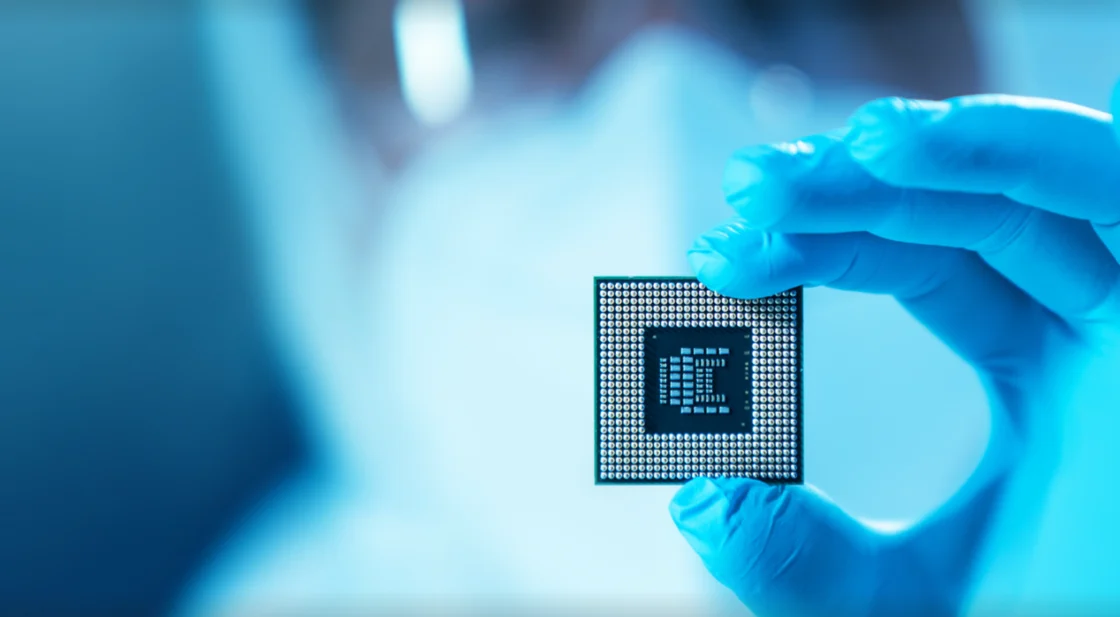
Microchip (Source: Adobe Stock)
HPA is 20 – 30x more thermally conductive than silica, electrically insulating, and one of the hardest and most durable materials on the planet. Swapping silica for HPA as a thermal filler can potentially reduce chip temperatures by 5°C or more – a meaningful gain when you are running a 1,000-watt processor around the clock. Thermal filler HPA demand is projected to grow from essentially zero to 8,000–18,000 tpa by 2030.
More importantly, material that sits directly next to a semiconductor needs to meet other strict specifications. Radioactivity, naturally occurring as a trace element, needs to be extremely low or risks corrupting data within the chip. For an AI model running critical AI workloads, for example financial risk calculations or medical diagnostics, across millions of chips, the outcome can be catastrophic.
Meeting this consistently, at commercial volumes, without degrading product quality, is a process challenge that no existing HPA supplier has been able to solve at commercial scale, until now.
One of the only commercial-scale producers of ultra-low alpha HPA in the world
In March, AEM launched SupALOX™ L-Series ultra low alpha HPA products. The only company globally able to commercially produce HPA that is essentially free of radiation emitting material.
Independently confirmed across multiple laboratories and customers already confirming the material meets their low-alpha requirements. AEM is now in commercial scale production to supply customers in Korea, Japan and China for industrial scale trials. With a broader pipeline of 139 projects in laboratory trials, 25 in industrial trials, and 15 in active commercial relationships, across North America, Europe, Japan, Korea, Taiwan, and China – representing ~US$134m in potential annual revenue.
AEM also serves a broad and growing range of end markets beyond semiconductors, including smartphone components, optical chips, advanced ceramics and EV batteries. Each application requires a bespoke product specification, with particle size and purity tailored to the customer’s production line. Meaning every qualification that AEM completes becomes a sticky, long-term commercial relationship.
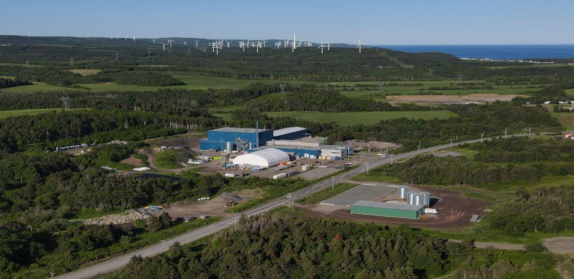
AEM’s Cap-Chat plant in Quebec, Canada (source:AEM)
AEM’s proprietary Chlorine Leach Crystallisation Purification (CLCP), uniquely suited to the low-alpha HPA challenge, was developed over years at its Montreal Technology Development Centre.
A competitor starting today would need years and hundreds of millions of dollars just to build a plant. Then another one to three years to qualify for a single customer application, a timeline which cannot be shortened. AEM has been running customer qualifications since 2021, so any new entrant is, at minimum, half a decade behind.
Additionly, AEM’s plant runs on <98% renewable electricity from Hydro-Quebec. The result is a carbon emissions profile approximately 77% lower than traditional production methods – increasingly important to European and Asian semiconductor manufacturers facing their own ESG commitments.
The right people for the job
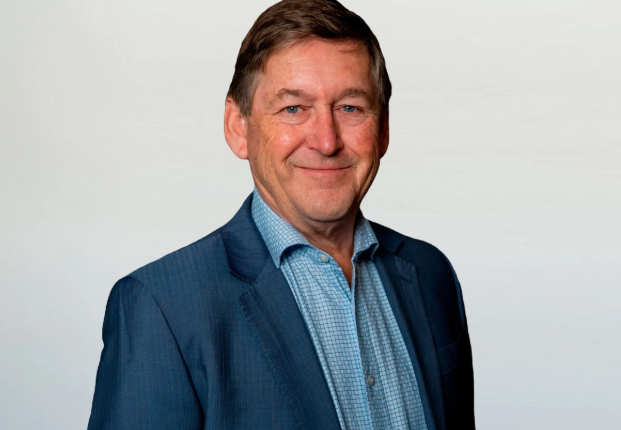
The company is led by Executive Chairman Richard Seville, well known for leading lithium producer Orocobre from a AU$7m float to a AU$4 billion-plus exit, and for building relationships across the Japanese and Korean battery and materials supply chains – relationships that are directly relevant to AEM’s customer development today.
AEM’s Cap-Chat plant in Quebec, Canada (source:AEM)
Managing Director and CEO, Michael Adams is a Cambridge and INSEAD-trained chartered engineer with over 40 years of experience developing, financing, and delivering major industrial infrastructure projects. He has been continuously involved with AEM since 2019, relocated to Cap-Chat to lead the business on the ground. He spent nearly 30 years based in Greater China, giving him operational and commercial fluency directly relevant to AEM’s customer base.
This is a team that has built global-scale resources businesses before, understands Asian customer relationships, and has the financial and technical depth to execute AEM’s expansion plan. Positioned as the only producer able to deliver, at scale, the critical material the world urgently needs as it transitions toward AI and electrification.